My Blog

Author name: prarthana.xcosmie

categorized

What Is the Universe Made Of?

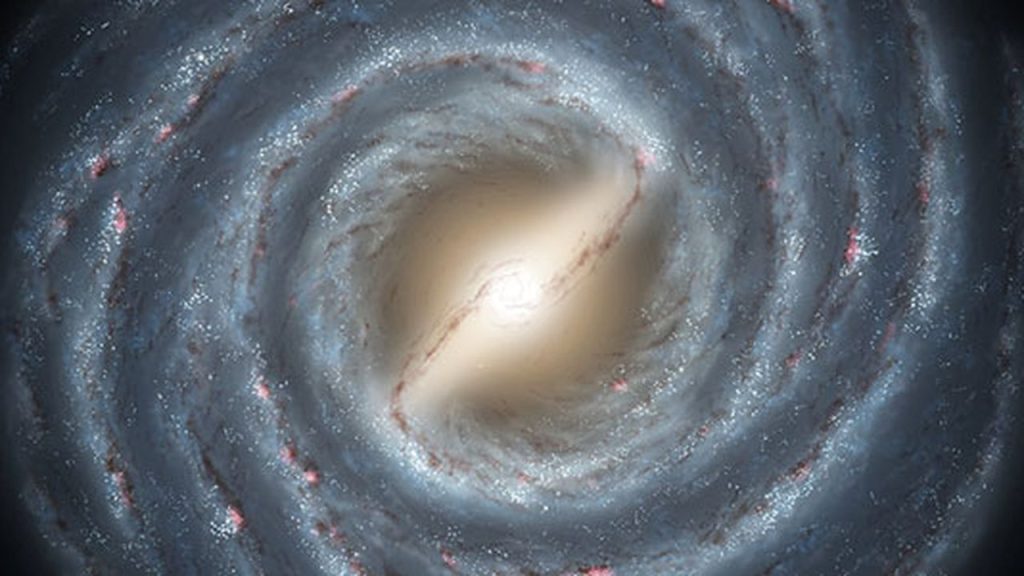
What Is the Universe Made Of? A Simple Guide to Matter, Dark Matter, and Dark Energy 1. Ordinary Matter (Atoms) Ordinary matter is the stuff we can see and touch. It includes everything from planets and stars to humans and animals.  This matter is made of tiny particles called atoms.Objects like Earth, Mars, stars, and even entire galaxies are made from these atoms. Surprisingly, ordinary matter makes up only about 5% of the entire universe. 2. Dark Matter Dark matter is one of the biggest mysteries in astronomy. Scientists cannot see it directly because it does not emit light or energy. However, they know it exists because its gravity affects the movement of galaxies. For example, in our galaxy, the Milky Way, stars move in ways that suggest there must be a large amount of invisible matter holding everything together.Dark matter makes up about 27% of the universe. 3. Dark Energy Dark energy is an even bigger mystery. Scientists believe it is responsible for the expansion of the universe. In fact, the universe has been expanding ever since the Big Bang.Dark energy pushes galaxies away from each other, causing the universe to grow larger over time. It makes up about 68% of the universe, which means most of the universe is made of something we still do not fully understand. Final Thought Even though scientists have learned a lot about space, most of the universe remains a mystery. Only a small portion of it is made of the matter we can see, like planets, stars, and galaxies.  The rest is invisible dark matter and dark energy that continue to puzzle astronomers.As scientists explore space and study galaxies like the Milky Way, we may one day uncover the true secrets of what the universe is really made of.

categorized

How Cold Is Space Really?

How Cold Is Space Really? Space is incredibly cold — but not in the way we usually imagine. The average temperature of space is about -270 degrees Celsius (-454 degrees Fahrenheit). This is only 3 degrees above absolute zero, which is the coldest temperature possible in the universe. Absolute zero is the point where all atomic motion nearly stops. Space feels so cold because it is almost completely empty. There is no air to hold heat like on Earth. On our planet, air and atmosphere trap heat and keep temperatures stable. In space, there are very few particles, so heat cannot spread easily. However, space is not always freezing everywhere. If an object is exposed to direct sunlight, it can become extremely hot. For example, in Earth’s orbit, the side of a spacecraft facing the Sun can reach temperatures of 120°C, while the shaded side can drop to -150°C. This creates extreme temperature differences. Astronauts survive these harsh conditions by wearing specially designed space suits. These suits control temperature and protect them from both freezing cold and intense heat. So, space is mostly extremely cold — but temperature in space depends on whether you are in sunlight or shadow. 🌠  

categorized

Cosmic Mysteries Scientists Still Can’t Explain

The universe is vast, ancient, and full of wonders. Even with advanced telescopes, powerful computers, and space missions, scientists are still surrounded by mysteries they cannot fully explain. Every new discovery answers some questions—but also raises many more. Let’s explore some of the biggest cosmic mysteries that continue to puzzle scientists today, in simple and easy language. 🌑 Dark Matter: The Invisible Mystery One of the greatest mysteries in the universe is dark matter. Scientists believe that dark matter makes up about 27% of the universe, yet it cannot be seen or touched. It does not give off light or energy, which makes it invisible. We know dark matter exists because galaxies rotate in ways that cannot be explained by visible matter alone. Without dark matter, galaxies should fly apart—but they don’t. Something unseen is holding them together. Scientists are still trying to find out what dark matter is made of and where it came from. 🌌 Dark Energy: The Force Expanding the Universe Even more mysterious than dark matter is dark energy. It is believed to make up about 68% of the universe. Dark energy is responsible for the universe expanding faster and faster over time. No one knows what dark energy really is. It works opposite to gravity and pushes galaxies away from each other. Scientists are unsure whether dark energy is a force, a property of space, or something completely unknown. Understanding dark energy could change everything we know about the universe. 🕳️ What Happens Inside a Black Hole? Black holes are regions in space where gravity is so strong that nothing—not even light—can escape. Scientists can observe black holes from the outside, but no one knows what happens inside them. At the center of a black hole lies a point called a “singularity,” where the laws of physics break down. Time and space behave strangely there. Does matter get destroyed? Does it enter another universe? Scientists have theories, but no solid answers yet. 🌠 Are We Alone in the Universe? One of humanity’s oldest questions is: Are we alone? There are billions of galaxies, each containing billions of stars and planets. Many of these planets lie in regions where life could exist. Yet, we have found no clear evidence of alien life so far. This mystery is known as the Fermi Paradox—if the universe is so big, where is everyone? Are we rare? Is intelligent life hiding? Or have civilizations already disappeared? Scientists continue searching for signals, microbes, and clues beyond Earth. 🌍 Why Is Earth So Perfect for Life? Earth seems perfectly designed for life. It has the right distance from the Sun, liquid water, a protective atmosphere, and a strong magnetic field. But why Earth and not other planets? Some scientists believe Earth is simply lucky. Others suggest there may be many Earth-like planets we haven’t found yet. This mystery helps scientists understand how rare or common life in the universe might be. ⏳ What Is Time, Really Time is something we all experience, but scientists still don’t fully understand it. Why does time move only forward? Why can’t we go back in time? In space, time slows down near strong gravity, such as near black holes. This shows that time is not fixed—it can stretch and bend. Understanding time better could unlock secrets about the universe’s past and future. 🌌 How Did the Universe Begin? The universe began with the Big Bang about 13.8 billion years ago. But what happened before the Big Bang? Was there something before the universe existed? Did time begin at the Big Bang, or was there another universe before ours? Scientists don’t yet have the tools or knowledge to answer these questions. 🌠 Why Is the Universe So Smooth? When scientists look at the universe on a large scale, it appears very smooth and evenly spread out. This is surprising because matter should have clumped together unevenly. Why does the universe look the same in all directions? Some scientists suggest a rapid expansion called cosmic inflation, but this idea still needs more proof. 🌌 Final Thoughts The universe is full of mysteries that remind us how much we still have to learn. Dark matter, dark energy, black holes, alien life, time, and the origin of the universe continue to challenge scientists every day. These unanswered questions are not failures—they are invitations to explore. Every mystery pushes science forward and brings us closer to understanding our place in the cosmos. The universe may be silent, but it is full of stories waiting to be discovered.
categorized

What Would Happen If Earth Had Two Moons?

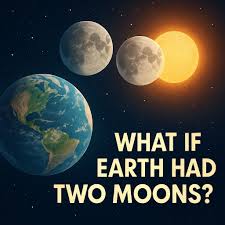
The Moon has always been Earth’s closest companion. It lights up our night sky, controls ocean tides, and has inspired stories, poetry, and science for thousands of years. But have you ever wondered—what if Earth had two moons instead of one? How would life change? Would it be beautiful or dangerous? Let’s explore this fascinating idea step by step, in simple language. 🌙 How Could Earth Have Two Moons? For Earth to have two moons, one of these things might happen: Scientists believe it is possible for a planet to have more than one moon—many planets like Mars, Jupiter, and Saturn already do. So, having two moons is not impossible. 🌌 How Would the Night Sky Look? The most noticeable change would be the night sky. Artists, photographers, and skywatchers would absolutely love it! 🌊 What Would Happen to Ocean Tides Our current Moon controls Earth’s tides. With two moons, tides would become stronger and more complex. If both moons pulled the oceans at the same time, tides could become extreme. If they pulled in different directions, tides could become unpredictable. 🌍 Would Earth’s Climate Change? Yes, Earth’s climate could change over time. The Moon helps keep Earth’s tilt stable, which controls seasons. A second moon could: Some regions might experience harsher winters, while others could have hotter summers. Farming and natural ecosystems would need to adjust. 🧭 How Would Life on Earth Be Affected? Life would slowly adapt, but there would be changes. Animals: Humans: Human sleep patterns might also change because brighter nights can affect our body clocks. 🪐 Would Two Moons Be Dangerous? Having two moons could bring some risks. However, if both moons had stable orbits, Earth could remain safe for a very long time. 🚀 Would Space Exploration Change? Absolutely! This could open exciting opportunities for space research and even tourism. 🌠 Would It Be Beautiful or Chaotic? Probably both. Two moons would make Earth more beautiful, mysterious, and unique. But they could also bring challenges like stronger tides, climate changes, and geological risks. Nature is powerful and adaptable, and over time, life would find a way to survive and evolve. 🌌 Final Thoughts If Earth had two moons, our planet would look stunning—but life would not remain the same. The oceans, climate, animals, and even human culture would slowly change. While it might feel like a scene from science fiction, this idea helps scientists understand how delicate and balanced our planet really is. Sometimes, having just one Moon is exactly what Earth needs.

Scroll to Top